Black vs white sesame: oil character, lignans, lot discipline
Both white (Sesamum indicum, light hull) and black sesame share core composition: oil 45-55%, moisture 5-7%, protein 18-25%, 1000-seed 2.5-4 g. Key differences: white → lighter golden oil + sesamin/sesamolin 0.4-0.7% + preferred for light-color premium retail. Black → darker amber oil + extra anthocyanins/melanin pigments + slightly higher lignans 0.6-1.0% + traditional Asian medicine and premium positioning. Press class identical (200-325 ton roasted / 355-500 ton cold), but lot separation and changeover are critical for SKU integrity.
White sesame profile
Light hull, lighter golden oil, sesamin/sesamolin 0.4-0.7%, preferred for light-color premium retail (salad, infant, cosmetic). 1000-seed 2.5-3.5 g typical. Tahini and Western premium markets.
Black sesame profile
Dark hull, darker amber oil with anthocyanin/melanin pigments, lignans 0.6-1.0% (slightly higher than white), traditional Asian medicine/health food positioning. 1000-seed 2.8-4 g typical.
Shared specifications
Oil 45-55%, moisture 5-7%, impurities <0.1%, FFA <0.5%, peroxide <5 meq O₂/kg. Both press on 200-325 ton (roasted) or 355-500 ton (cold). Both pack in 100-250 ml dark glass + N₂.
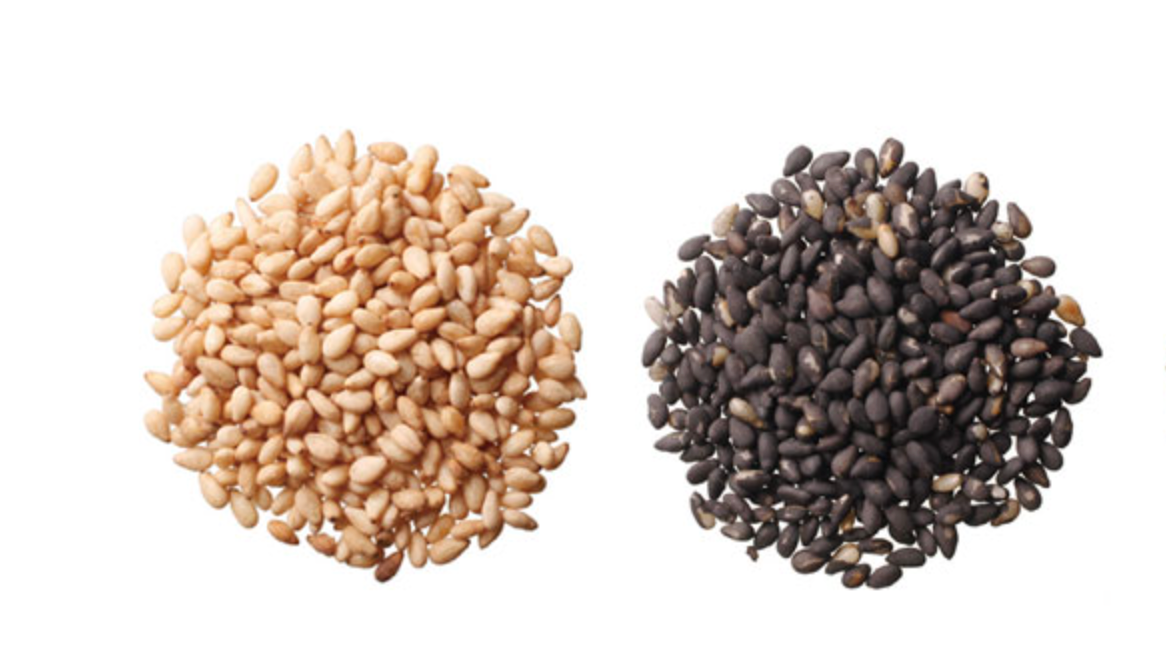
Composition differences
Where black and white sesame physically differ
- Hull color: white (cream/beige) vs black (deep brown/black) — pigment is in the hull and bleeds into oil during pressing.
- Oil color: white sesame → light golden (Lovibond Y 5-15, R 1-3). Black sesame → amber to dark brown (Y 25-50, R 4-8). Cannot mix without losing the white-sesame-oil light-color premium.
- Lignans: white sesamin + sesamolin 0.4-0.7%. Black 0.6-1.0% (slightly higher antioxidant capacity but darker oil).
- Roast response: black sesame absorbs more visible heat damage at 180-200°C; reduce roast time by 10-15% to avoid burnt notes.
- Press class: identical. 200-325 ton (roasted, 80-100°C, yield 40-50%, 40-60 min/cycle) or 355-500 ton (cold, ≤60°C, yield 35-42%, 60-90 min/cycle).
Lot planning
Variety lot discipline on a shared sesame line
Single variety, simpler
Dedicated white-sesame line OR black-sesame line. No changeover loss, no pigment carryover risk. Simplest quality control. Best for export brands with a single hero SKU.
Both varieties, dedicated days
Schedule by day (e.g., Mon-Wed white, Thu-Fri black), with one pre-flush batch on changeover days (sacrificial to drain residue). 30-60 min line flush + barrel cleaning + tank rinse.
Both varieties, same shift
Higher risk of cross-contamination. Requires duplicate barrels, dedicated tank lines, separate filter housings. Practical only at >2000 kg/day with strict process control.
Common errors
Where black/white sesame planning fails
- Treating black and white sesame as interchangeable in premium retail — pigment carryover destroys the light-color claim of white-sesame oil.
- Skipping lot separation: even one batch of black sesame contaminating the next white batch leaves visible amber tint that consumers reject.
- Roasting black sesame at the same 180-200°C × 15-25 min as white — black often shows burnt notes 2-3 min sooner. Adjust time per variety.
- Mixing varieties to 'simplify SKU' — kills the variety identity that justifies the premium price in the first place.
Questions to confirm next
Why is white sesame oil light golden but black sesame oil amber?
Can one press handle both varieties?
Keep following the route
These next topics keep route, oil finish, and packaging aligned
Ready to size a line for your oilseed?
Share route, flavor target, oil appearance, and package direction. That helps us tell whether the fit is a machine phase, a polishing module, or a fuller product-ready line.